Data production and the crucial role of digital cameras in making security intelligible to AI, CV / machines
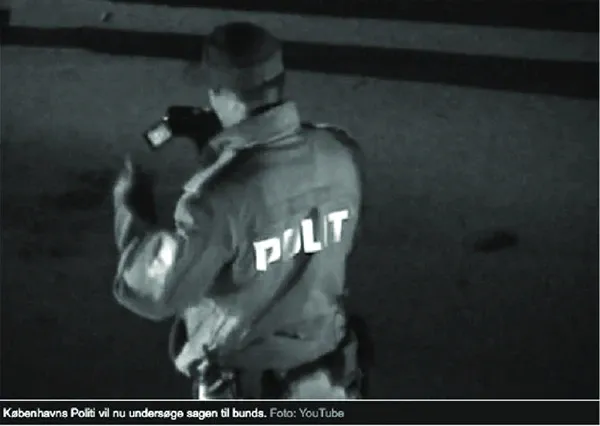
For computer vision – or any other kind of AI or software system – to be able to treat anything related to security, the security relations it enters into have to first be rendered as data. This is in a sense analogous to what all the bureaus producing numbers for statistical governance have done for centuries – render social properties in numbers so they can be related to other numbers and describe social relations in statistical abstractions. But in computer vision it happens through depicting the world in digital images and understanding these images as ‘transparent’ – as mirroring rather than producing or distorting the world itself.
Digital cameras are everywhere, and they play increasingly important roles in security politics. Yet they remain somewhat overlooked in security and IR research where debates on technology and visuality remain rather separated, often giving the mistaken impression that the digital images that populate visual security scholarship are primarily visual, and we need only worry about the visual cultures of those using them – they are not, and we do not.
Following on the above, in my projects I understand the digital camera as an active inscription device that produces digital images, for which the digital qualities are as important as the visual.
Through producing as standardised digital images that western society easily understands as ‘facts’, digital cameras become engines of ontological change that reconfigure political scenes, incorporate new actors and logics, and reconfigure the ones already present.
Digital cameras acquire security agency through our remarkable trust in digital cameras’ ability to capture reality ‘as it is’ and store it in standardised files. I call this epistemic authority – a generalized trust in the device as a producer of reliable knowledge, and the images as mediator of that. This is not absolute, as I show when investigating Black Lives Matter in the paper below, but it is remarkably strong – especially given all the debates we have had about digital photographic manipulation over the last 20 years – about photoshopping, deep-faking, AI-generated images, etc. Lev Manovic has written a funny little text about how ‘the digital image annihilates photography while solidifying, glorifying and immortalizing the photographic’. I view the epistemic authorities of cameras and digital images as competences that can be exchanged, shared, and reconfigured. Digital cameras are promiscuous, forming hybrids with e.g. images, digital media platforms, image appropriators, and camera operators. This relationality makes it hard to pin down exactly where the agency of digital cameras or images begins and ends. Viewed as an inscription device, the central faculty of the networked digital camera is that it inscribes the ‘reality’ of a political scene into standardised video-bites and snapshots, little security ‘facts’ preconfigured for effectively populating digital networks and databases. These are fragments, of course, but their standard quality allows for them to effectively link up to form part of larger assemblies, and also to effectively constitute the world for society in general.

Saugmann, R. (2020). The security captor, captured. Digital cameras, visual politics and material semiotics. Critical Studies on Security, 8(2), 130–144.